Build Mode™ Issue 01.2026
Hello and welcome to this issue of Build Mode, a monthly update with brand insights to help you level up your business. We have an ambitious group of professionals working in real estate, architecture, engineering, construction, marketing, design, and development. You all inspire me to keep sharing, so thank you for being here.
Haven’t subscribed yet? Consider joining us and get the next issue delivered straight to your inbox on the first of the month.
I recently conducted research into a handful of award-winning architectural firms. Top of their game. The work, incredible. Design excellence of the highest quality. But the sad part was, across the board, their positioning was basically imperceptible.
If the work product is the same, why would a client choose one over the other?
What is there to go off of?
For those of you who were here nearly two years ago, I wrote about brand positioning, the act of intentionally choosing your place in the market, one where no one else occupies.
I came at it mostly through the lens of differentiation. Today, I want to extend this idea, in not only defining the difference, but making a claim and declaring it to the world.
(Even if it feels scary to commit to something so boldly.)
Let’s dig in.

What does it mean to make a positioning claim?
There’s a part of brand strategy that feels terrifying. On the surface, we don’t like the idea of positioning. To choose one idea, one market, one service, one client… it all feels like we’re limiting ourselves and excluding potential opportunities.
If you follow a templated positioning framework, you’ll end up with limitations.
You say you design custom luxury homes, so you exclude the homeowner knocking on your door asking for a garage and in-law suite addition.
You say you’re a real estate investment firm working with family offices, so you exclude the institutional investor with capital ready to deploy.
As a resolution, we pivot. Shift territories. Move with the tide. Adjust our positioning (even if only slightly). Rewrite our ‘About’ paragraph, to cater to the opportunity. Make the firm seem more palatable, for fear of losing the opportunity, adjacent to our expertise but one that we can’t possibly pass up. In the process, we lose any kind of memorability because we’re always adjusting our stance.
(You get the picture. Not good.)
There’s another way.
Here’s what I’ve found with the firms I’ve worked with:
Within their walls, there’s already something different about them (usually hidden under the surface). It just requires unearthing. Yes, positioning is identifying how you’re different. It’s also making a claim in the market, then, having the courage to live up to it. Or, if you prefer a strong visual metaphor…
Positioning is planting your flag — claiming territory and signaling to others: ‘this is where we stand.’
It’s a process of:
Uncovering what makes you truly different
Identifying the value of that difference
Then, connecting that value to the people who benefit most
Here are a few examples of what a positioning claim — ‘planting your flag’ — might look like.
Generic statement:
We’re a full service architecture and interior design firm delivering a variety of project types.
Positioning claim:
We design spaces that activate human potential — where people move, gather, and connect.
Generic statement:
We are a real estate development company focused on residential and commercial projects throughout the region.
Positioning claim:
We turn neglected and overlooked places into vibrant, walkable, mixed-use communities that thrive.
Generic statement:
We deliver construction management services for commercial, industrial, and institutional clients.
Positioning claim:
We deliver fast-track builds for clients that demand speed, without compromising safety or execution.
The first generic statements could be literally any firm anywhere. They’re broad, interchangeable with other industry players in the same market, and don’t articulate any point of view.
In contrast, the second statements are ones that stake a territory, and invite people who resonate with it to step forward. It’s clear, specific, and for those who resonate with it, it draws them in to join you.
It’s basically saying: ‘If this is what you need, choose us.’
Why making a positioning claim matters
Claiming a position is more than just making a statement.
Here’s what it does for your brand and your business:
The people you’re trying to reach will find you (because they’re looking for specific solutions)
The people you’re not for will disqualify themselves (saving you effort on the wrong pursuits)
It signals to others how you’re different (leading to clearer choice)
It makes business decisions simpler (because things are a clear black and white, not gray)
And most importantly,
You become compelling
People are compelled to work with you. In marketing terms: more inbound leads coming your way, and less outbound and outreach effort needed. You go from a vendor (blech!) to an expert partner — the type of firm they were searching for, and found.
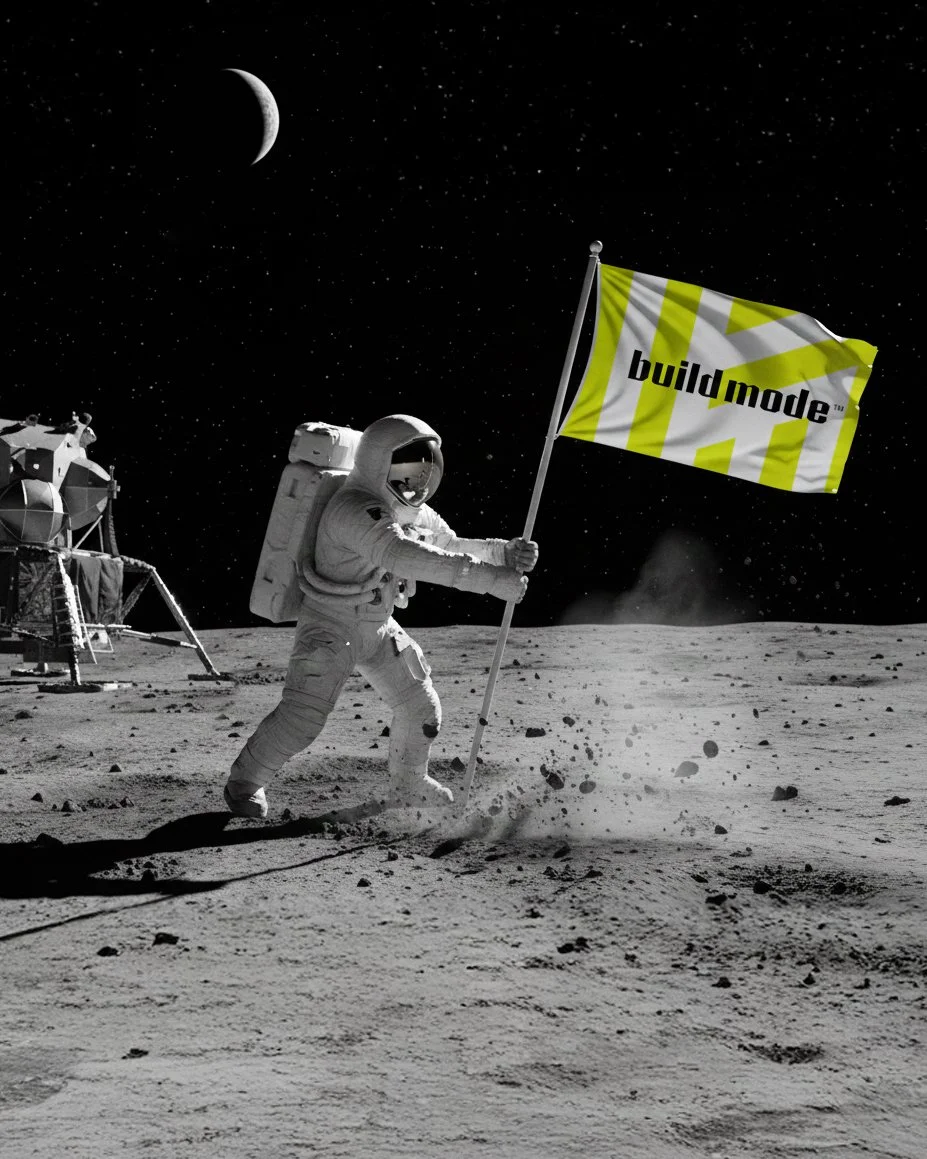
What you can do nextPlant your flag
Here’s a test:
Is there a statement you can make, without your own company name, where others in your industry could identify you?
If not, it might mean there isn’t a clear way to distinguish your brand from others in your industry. The good news is there’s a solution. Here are a few ideas on where and how to uncover your unique value and plant your flag.
People
Is your offer for a very specific type of client? Don’t view your claim as a way of excluding people. Look at it instead as a way of including and attracting the people who could benefit most from your offer.
Service
Is how you deliver your services actually different? Not in the we-value-our-clients-and-build-long-term-relationships sort of way, but something truly different. Digital-only service model. Guaranteed results. Design/cost integration. Again, actually different.
Approach
Is there a method or framework you’ve established? Something ownable and proprietary that is a real benefit in your offer? If so, give a name. Throw a TM on it, which is a symbol to indicate an unregistered trademark, and signal your intent of ownership of a real value proposition.
Expertise
Is there a unique angle in your portfolio? A concentration of experience, or a combination of experiences, that give you pattern recognition that others don’t have? When you become known as an expert in your field, you become the go-to option for what you can do. Your repetition results in mastery.
All things being equal (and they often are), positioning becomes the deciding factor.
And finally, while simply making a claim is one part, the other part is delivering proof. So, this month, take one action that signals your commitment. It could be editing your firm profile, creating a content campaign, reframing case studies, or even updating internal language.
I’m a work-in-progress too. Everything I advise on, are also parts of what I’m working on, for myself and my brand. But, I’ve planted my flag on serving ‘business leaders in build mode.’ Is this statement perfect? Probably not. But it’s where I’m at right now. I think it’s enough to indicate I work with those in charge of their organizations, who are in a state of growth, while building upon a foundation of previous success (plus, with a subtle nod to the built environment).
My hope is to continue providing you all valuable information for you to evolve your own business.
So, go ahead: plant your flag. The right people will find you.
That’s all for this edition of Build Mode! If this resonated with you and you think it might help others, feel free to forward it to a colleague. And if you’d like to discuss how to claim a position with intention, get in touch — I’d love to hear from you.
Best.
Kenny Isidoro

Those who stand for nothing, will fall for anything.
— Alexander Hamilton
Work zone
I work with business leaders in build mode, those who are ambitious and in a state of growth. If that's you and you're ready to build, there are three ways I can support you.
Brand Effectiveness Score™
Your free self-assessment to evaluate how effective your brand is as a lever for your business, built entirely on MUDEO’s own frameworks.
Get your Brand Effectiveness Score™
Brand audit
I analyze your brand, plus other industry players, and make recommendations for increasing its effectiveness in your business.
Inquire about an audit.
Custom-built brand
I guide business leaders in your organization through a linear process of defining or redefining your brand in four phases: discover, define, develop, and deliver.
Discuss your project.
Subscribe to Build Mode™
a monthly update with brand insights and how they can apply to your practice and your projects. Issues drop on the first of each month. Feel free to unsubscribe if the updates aren't valuable for you. No hard feelings.